
- July 25, 2026
- Posted by: admin
- Category: Employment Law

Key Takeaways
- A termination without cause is generally legal in Ontario if the employer provides proper notice or compensation.
- Employees may be entitled to more than the minimum Employment Standards Act requirements.
- Wrongful dismissal and constructive dismissal are different legal concepts.
- Reviewing a termination package before signing can help you understand your legal rights.
- Knowing employer obligations and legal timelines allows employees to make informed decisions.
Losing your job can feel stressful and uncertain, especially if you weren’t expecting it. You may be wondering whether your employer handled the termination properly, what severance you’re entitled to, and what your next steps should be. While employers in Ontario can legally terminate employees without cause, they must still meet important legal obligations – and many employees are entitled to more compensation than they first realize.
If you’re looking to better understand your workplace rights, explore Employment Law through Nadi Law’s employment law resource before reviewing your specific situation.
Many people searching for employment law Whitby are looking for answers about severance pay, employer responsibilities, and whether they should accept the first offer they receive. Knowing your rights before making a decision can help you avoid costly mistakes.
What Does Termination Without Cause Mean?
A termination without cause occurs when an employer ends an employee’s employment without alleging misconduct, poor performance, or any other disciplinary reason. Instead, the employer decides to end the employment relationship because of operational or business considerations.
Common reasons include:
- Company restructuring
- Department closures
- Budget reductions
- Position elimination
- Business sales
- Workforce reductions
Unlike dismissal for cause, the employee has not engaged in serious misconduct that would justify immediate dismissal without compensation. Although employers generally have the right to terminate employees without cause, they usually must satisfy their legal obligations regarding notice or compensation.
Employer Obligations Following a Termination
When employment ends without cause, employers may be required to provide:
| Employer Requirement | Description |
|---|---|
| Written notice | Advance notice that employment will end. |
| Termination pay | Compensation instead of working notice. |
| Statutory severance pay | Additional compensation for eligible employees. |
| Benefit continuation | Continued benefits during the statutory notice period where required. |
| Final wages and vacation pay | Payment of outstanding employment earnings. |
The exact obligations depend on several factors, including the employee’s length of service, employment agreement, and applicable legislation.
Is a Termination Without Cause Legal in Ontario?
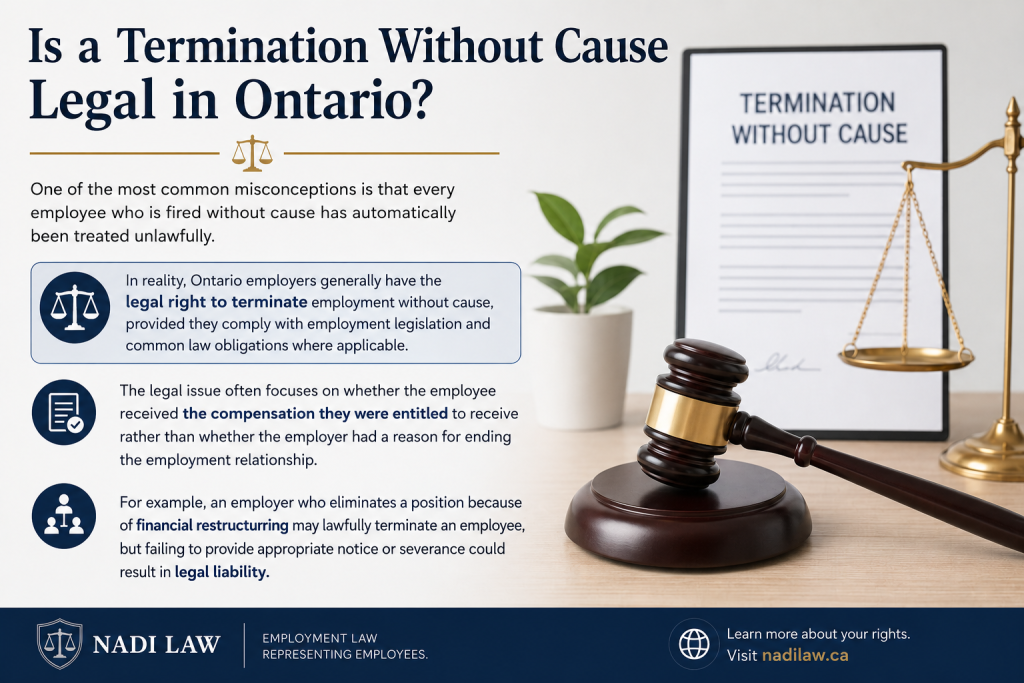
One of the most common misconceptions is that every employee who is fired without cause has automatically been treated unlawfully. In reality, Ontario employers generally have the legal right to terminate employment without cause, provided they comply with employment legislation and common law obligations where applicable.
The legal issue often focuses on whether the employee received the compensation they were entitled to receive rather than whether the employer had a reason for ending the employment relationship. For example, an employer who eliminates a position because of financial restructuring may lawfully terminate an employee, but failing to provide appropriate notice or severance could result in legal liability.
Difference Between Termination Without Cause and Wrongful Dismissal
Many people mistakenly use these terms interchangeably. However, they have different legal meanings.
| Termination Without Cause | Wrongful Dismissal |
|---|---|
| The employer ends the employment relationship without alleging employee misconduct. | The employer fails to meet their legal obligations when ending the employment relationship. |
| Can be legal under Ontario employment law if proper notice or compensation is provided. | May occur when the employer provides less notice or compensation than the employee is legally entitled to. |
| Often happens due to restructuring, downsizing, or business changes. | Common reasons include insufficient notice, inadequate severance, unenforceable termination clauses, or breach of the employment contract. |
| The focus is on the employer’s decision to end the employment. | The focus is on whether the employee received their full legal entitlements after termination. |
| Employees should review the severance package before accepting it. | Employees may have grounds to pursue additional compensation if their rights were not respected. |
Employees speaking with an employment lawyer Vaughan often discover that their initial severance package reflects only minimum statutory entitlements rather than potential common law notice.
How Constructive Dismissal Is Different
Constructive dismissal differs from both wrongful dismissal and termination without cause because the employee technically resigns after the employer makes fundamental changes to the employment relationship.
Examples include:
- Significant salary reductions
- Major changes to job responsibilities
- Demotions
- Forced relocations
- Significant reductions in working hours
- Toxic workplace changes
In these situations, the employer’s conduct may effectively end the employment relationship even without issuing a formal termination notice.
Understanding these distinctions is important because each type of claim follows different legal principles.
What Compensation May Be Available?
Employees who experience a termination without cause Ontario may be entitled to several forms of compensation.
Statutory Notice
Ontario’s Employment Standards Act establishes minimum notice requirements based primarily on an employee’s years of service. These statutory minimums represent the legal floor rather than the maximum compensation available.
Statutory Severance Pay
Some employees also qualify for statutory severance pay if they satisfy the eligibility requirements established under Ontario employment legislation.
Eligibility depends on factors including:
- Length of employment
- Employer payroll
- Circumstances of the termination
Common Law Reasonable Notice
Many employees may also have common law entitlements that exceed the statutory minimums.
Courts typically consider factors such as:
- Age
- Length of service
- Position
- Compensation
- Availability of comparable employment
This explains why two employees with similar years of service may receive significantly different severance amounts depending on their individual circumstances.
Why You Should Not Rush to Sign a Termination Package
Following a dismissal, employers frequently provide employees with a severance package and request that it be signed within a relatively short period.
Although these deadlines may seem urgent, signing immediately could affect your ability to negotiate additional compensation.
Before signing any agreement, employees should carefully review:
- The amount of compensation offered
- Whether benefits continue
- Bonus or commission entitlements
- Release provisions
- Restrictive covenants
- Acceptance deadlines
Taking time to understand your legal position before signing any release is often an important part of protecting your rights.
Employees reviewing severance agreements frequently consult employment lawyers Oshawa to better understand whether the package reflects only statutory minimums or broader common law entitlements.
Employer Obligations After a Dismissal Without Cause in Ontario
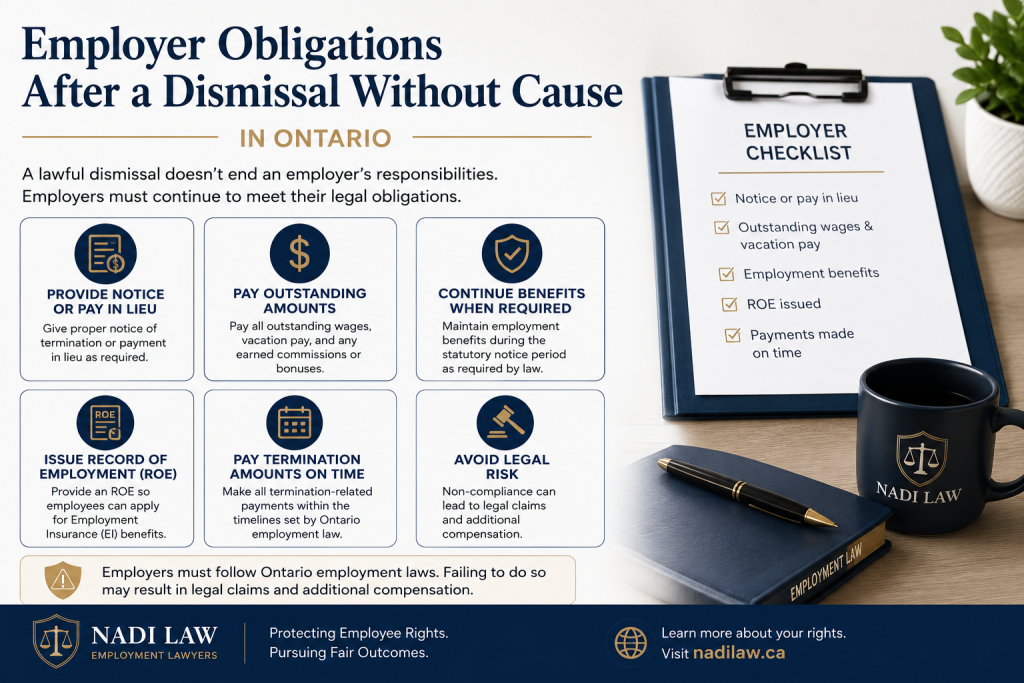
A dismissal without cause Ontario does not end an employer’s legal responsibilities. Even when the decision to terminate employment is lawful, employers must continue to comply with several statutory and contractual obligations.
These responsibilities generally include providing the appropriate notice or pay in lieu of notice, paying outstanding wages, vacation pay, and any earned commissions or bonuses that remain payable under the employment agreement. Where required by the Employment Standards Act, employers must also continue certain employment benefits during the statutory notice period.
Another important obligation is issuing a Record of Employment (ROE), which employees need when applying for Employment Insurance (EI) benefits. Employers are also expected to pay termination-related amounts within the timelines established by Ontario employment legislation.
Failure to comply with these obligations may expose an employer to legal claims, particularly where employees receive less compensation than they are legally entitled to.
Understanding Severance Negotiations
Many employees assume the first severance package offered by an employer is non-negotiable. In practice, this is not always the case. An initial offer may represent only the employer’s assessment of minimum legal obligations rather than an employee’s full entitlement. Depending on the circumstances, employees may have grounds to negotiate for additional compensation.
Several factors can influence severance negotiations, including the employee’s age, length of service, position within the organization, level of compensation, and the likelihood of finding comparable employment within a reasonable period. Employment contracts also play a significant role. Some agreements contain termination clauses that limit severance entitlements, while others may not be enforceable under Ontario law. Where a termination clause is invalid, common law notice may apply instead.
Understanding these issues before responding to an employer’s offer can help employees make informed decisions about their next steps.
Important Timelines Following a Termination
The days immediately after losing a job can be overwhelming. Although employers often request a quick response to a severance package, employees should avoid making rushed decisions without understanding the legal implications.
A practical approach after receiving a termination package includes:
- Carefully reviewing every document provided by the employer.
- Keeping copies of employment contracts, offer letters, and workplace policies.
- Recording conversations relating to the termination while the details remain fresh.
- Confirming what compensation has been offered and whether benefits will continue.
- Seeking clarification before signing any release or settlement agreement.
Employees frequently seek guidance from employment lawyers Oshawa when faced with short deadlines, particularly where they are uncertain whether the employer’s offer reflects their complete legal entitlement.
Factors That Can Affect Your Severance Entitlement
No two employment situations are exactly alike. While years of service are important, several additional factors may influence the amount of compensation an employee may receive following a termination without cause.
Some of the considerations commonly examined include:
- Age of the Employee: Older employees may require more time to secure comparable employment, which can affect reasonable notice assessments.
- Length of Service: Employees who have devoted many years to a single employer may have stronger claims for extended notice periods under common law.
- Nature of the Position: Senior management, executive, and highly specialized positions may involve longer periods of reasonable notice because similar employment opportunities are often less readily available.
- Availability of Comparable Employment: Economic conditions and labour market opportunities can also influence severance assessments. Employees working in specialized industries or regions with fewer comparable positions may experience longer job searches.
Because every situation is unique, severance should be assessed based on the complete employment relationship rather than one factor alone.
Common Mistakes Employees Make After Being Fired Without Cause
The period immediately following a dismissal is often stressful, making it easier to overlook important details. Some of the most common mistakes include accepting the first severance offer without reviewing it carefully, signing a legal release before understanding its consequences, or assuming the Employment Standards Act represents the maximum compensation available.
Another common mistake is failing to retain copies of employment documents such as contracts, performance reviews, bonus plans, or correspondence relating to the termination. These records can become important if questions later arise regarding severance or contractual obligations.
Employees should also avoid relying solely on informal advice from friends or colleagues, as employment rights depend heavily on the specific facts of each case.
Understanding Ontario Employment Law Resources
Ontario employees often search for local employment law information while reviewing severance packages or considering their legal options. Whether someone is researching workplace rights after restructuring or evaluating a termination agreement, access to reliable legal information can help them better understand the process.
Individuals looking for a Markham employment lawyer may be seeking guidance about employment contracts, wrongful dismissal claims, or severance negotiations after losing their jobs. Although employment legislation applies across Ontario, every employment relationship involves unique facts that should be evaluated individually.
Learning about your legal rights before making decisions regarding a severance package can help reduce uncertainty during an already challenging time.
Conclusion
Experiencing a termination without cause can leave employees with many questions about their financial security and legal rights. Although Ontario employers are generally permitted to terminate employment without cause, they must still satisfy important legal obligations relating to notice, severance, and final compensation.
Understanding the distinction between termination without cause Ontario, wrongful dismissal, and constructive dismissal can help employees evaluate whether the compensation they receive reflects only the statutory minimums or potentially broader common law entitlements. Taking time to review a termination package carefully before signing may help avoid decisions that cannot easily be reversed.
If you are trying to understand your rights after a workplace dismissal or reviewing a severance package, Nadi Law provides information on Ontario employment law that can help you better understand your options before taking the next step.
Frequently Asked Questions
1. Can an employer terminate an employee without cause in Ontario?
Yes. Ontario employers can generally terminate employment without cause provided they meet their legal obligations, including providing appropriate notice or compensation in accordance with applicable employment laws.
2. Is termination without cause the same as wrongful dismissal?
No. A termination without cause simply means the employer ended the employment relationship without alleging misconduct. Wrongful dismissal occurs when the employer fails to provide the notice, compensation, or contractual rights required by law.
3. Should I sign my severance package immediately?
It is generally advisable to review the package carefully before signing. Many severance agreements include a legal release that may affect your ability to pursue additional compensation later.
4. What factors affect severance after a termination without cause?
Several factors may influence severance, including your age, length of service, position, compensation, employment contract, and the availability of comparable employment in the job market.